Latest Posts

Introducing our new short film — ‘Neon San Francisco: the N Judah’

We always have some sort of project in the works. The latest of these is our new short film called ‘Neon San Francisco: the N Judah’.

In the film, we follow San Francisco’s N Judah Muni line from the CalTrain/Ball Park, through downtown and out to Ocean Beach.

800px-Muni_Metro Read More

Photo Post: The Start of Summer in San Francisco

You know the feeling when you suddenly feel inspiration all around you? Everywhere I turn, it’s beautiful, engaging, inspiring. The taste of bing cherries, the smell of salt on the bay air, the glorious sunsets, the graffiti etched into library desks. It’s as though I have been asleep for weeks.

IMG_6223a

Read More

The Emotional Rollercoaster of Expat Life: Acclimatising (Part 2)

This is the second post in a five-part series about the emotional component of the expat experience: leaving home, settling in and the issues faced in adjusting to life in a new country.
Missed the first post? Read ‘Part 1: Leaving Home’ here.
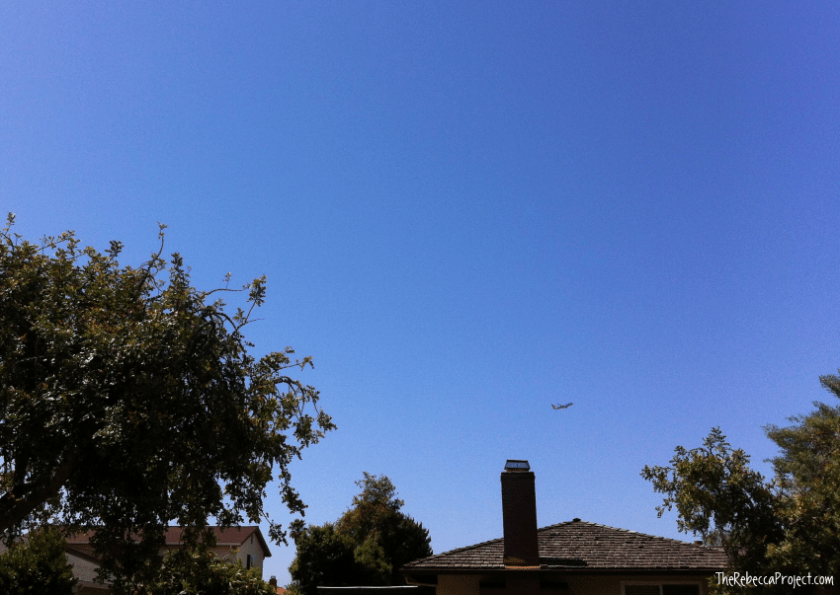
Under the big California skies.

Under the big California skies.

Adjusting. Acclimatising. Settling-in. Whatever you call it, it can be difficult and it can also be a very long process. But what I want to talk about in this post is adjusting in the first few weeks of arriving somewhere new.

What I’ve discovered after relocating numerous times is that it helps to create some order, some sense of normalcy to help you ease into the transition. Creating a new ‘normal’ can give you some semblance of peace, and helps to ground you in your new environment.

Creating a Routine

After unpacking my bags and hanging my clothes in the closet, I tackle my routine.

My routine has been different in every city I’ve lived in and often takes some tweaking to get things right. I build in the non-negotiables: sleep, good food and exercise. Then I add the things into my schedule that make me happy, things like exploring and photographing my new neighbourhood, journalling, reading, joining clubs, making friends. I also include regular ‘touchstones’ that help keep me grounded and connected to those I love, such as skyping with my family and the Sunday coffee date with the American where we decompress and plan the weeks ahead.
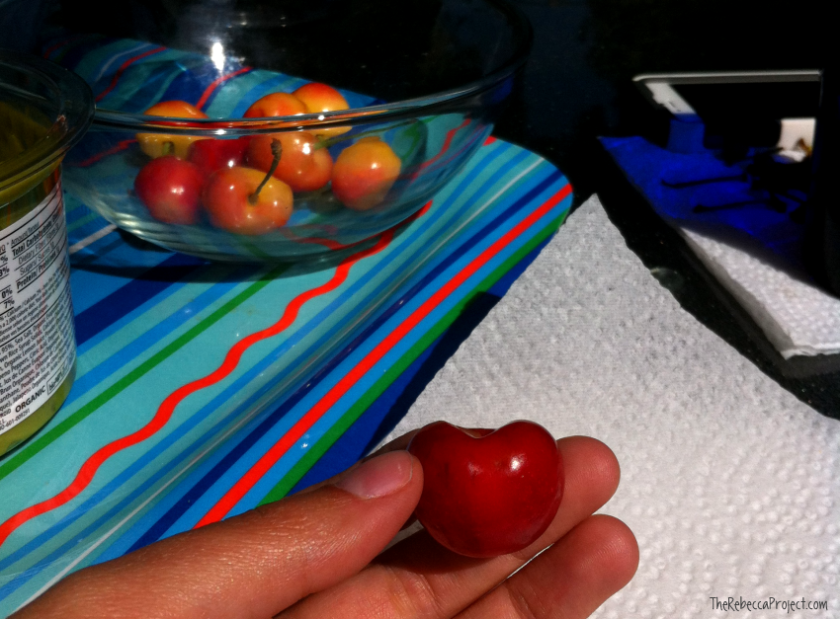
Enjoying summer's bing cherries and good conversation.

Enjoying summer’s bing cherries and good conversation.

Make time to do the things that make you feel good, no matter where in the world you find yourself.

For me, getting my physical space in order and my routine in place is important, but it’s as equally important (if not more so) to get my head in order.

Writing is the new therapy

Moving is an emotional experience: there’s an ending and a new beginning. It’s completely normal to be emotional, and find yourself completely overwhelmed. The best strategy I’ve found to help me face this new transition is writing. I put my thoughts down on paper to help me identify what I want from this experience, and my expectations of what life will be like. I ask myself what I seek by moving abroad.

This ‘daydreaming’ about what life will hold for me is something that helps me monitor my expectations. I learned the hard way that not every moment in Ireland would be full of good times down the pub, sharing a few pints with chatty, flushed-cheeked locals. So now, I find it helps to explore my expectations and be realistic in my idea of life overseas.
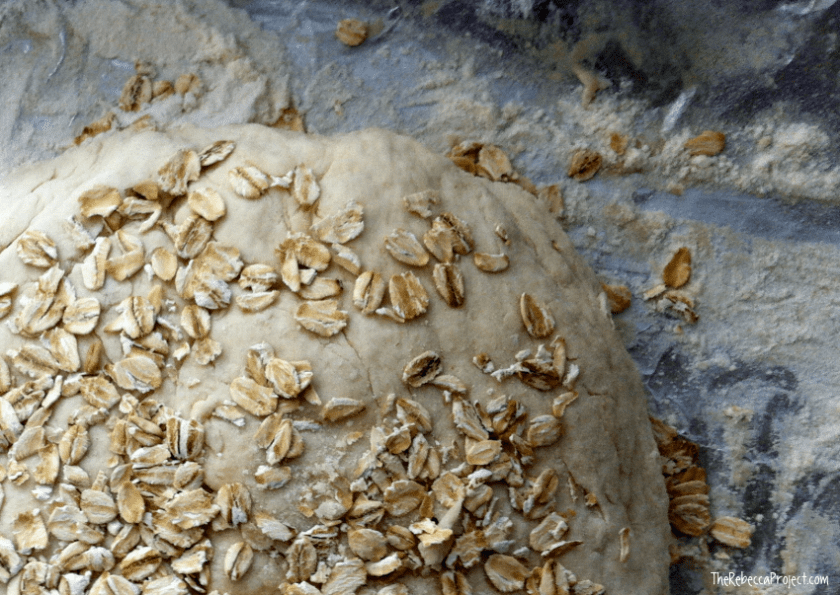
Laying low, perfecting my Irish soda bread.

Laying low, perfecting my Irish soda bread.

The Hibernation Cycle

I have just moved back from Sydney to the San Francisco Bay Area, and it’s not my first time doing so. Nevertheless, it’s been a few weeks since I touched down, and I’m still not completely settled here. The deep heartache I felt leaving Sydney has made me very emotional, and it’s taking much longer to wear off this time. It always takes much longer than anticipated to adjust.

One thing I have learnt about myself as I’ve travelled over this past six-and-a-half years is that I’m someone who needs to feel a base level of comfort in order to open myself up to new experiences. So I’ve developed a system of hibernation when I arrive in a new long-term location, and one that meets my needs for stability. Here’s how it usually works:

I arrive safely in the land, and most often intensely jetlagged. I email Mum to tell her I’m alive, only to find out she has been FlightTracking me the whole way and already knows all is well. I get to the house/hotel, and bunker down. If I’ve left somewhere I’ve called ‘home’ then I’m usually blue for a few days, that low oscillating melancholy triggered by separation. So, lest I burst into tears at the Supermarket, I lay low.

I don’t usually contact anyone for at least a week, or two. During this time, I readjust my sleeping patterns and establish a routine. I spend time writing and drinking loads of tea. I focus on just acclimatising.

I emerge from my bunker occasionally to take walks, sometimes to the supermarket. I play tennis or ride a bike. Whatever I do is on the down low. My time is spent unpacking my bags and creating order in my room/apartment. And then I reemerge a few weeks later, butterfly-like, ready to tackle the world.

Big California sunsets.

Big California sunsets.

It just takes time

So this week has marked the end of the initial transition period. I’ve spent an afternoon catching up with my old work colleagues at the courthouse, the American took me to his childhood hometown of Danville, we enjoyed an impromptu road trip to Monterey and Carmel, and I’ve reconnected with most of my friends here in the Bay Area. Slowly, but surely, life is beginning (again) here for me. I’m starting to feel the rhythm of life here in the Bay Area. It just takes time.

Missed ‘Part 1: Leaving Home’? Catch up here.

The Emotional Rollercoaster of Expat Life: Leaving Home (Part 1)

This is the first post in a five-part series about the emotional component of the expat experience: leaving home, settling in and the issues faced in adjusting to life in a new country.

IMG_4943a

It has been a difficult few weeks. In preparing to leave Sydney and return back to San Francisco, I felt like a hot mess. I was a hot mess. And that’s okay. I knew what to expect (this isn’t my first go round) and I’ve been much kinder to myself and more open about my experience. Those actions have made things easier to process. Nevertheless, it has still been hard.

The emotional stages an expat passes through as they prepare to relocate is best described as a rollercoaster. Plenty of twists and turns and peaks and drops and being turned upside down, and all of it is lived at a frenetic pace. It can be overwhelming: you’re leaving behind one life to start another. You’re giving away your possessions. You’re farewelling your support networks. You’re cataloguing the ‘lasts’: the last time you’ll go for coffee at that little shop around the corner, the last time you’ll be able to duck out for dinner with your friends, the last time you’ll get to see your beloved football team play in the flesh. This time of your life is stressful and tumultuous, and it’s completely reasonable to be a hot mess. It’s a big step, even if it is one you’ve already taken before.

Relocating can be daunting, emotionally. But you have to be kind with yourself.

Relocating can be daunting, emotionally. But you have to be kind to yourself.

[Source]

The Expat’s Emotional Rollercoaster of Relocating

So with time and a little perspective, I’ve been able to identify the general emotional stages an expat will likely go through when relocating to a new country:

First is the sense of impending doom. I feel this acutely as the date of departure creeps up and plans must be finalised. It’s usually accompanied by a deep, sinking feeling even though it’s an exciting adventure.

This is followed by the stage of intense overwhelm, and that’s usually identified by the uncontrollable sobbing in random places. It usually occurs when I’m packing my bags. This time for me, it was being unable to make it up the stairs to continue packing without collapsing and sobbing into the carpet like a baby.

Then comes actively committing things to memory: filing away into the memory bank all the aspects of hugs and smiles and feelings and the lines on friendly faces. You catch yourself wondering if this is the last time you will see aging family members, the family dog (and then you yell at yourself, but that’s all you can think about).

It crescendos into wishing time would stop/speed up/not exist when the final farewells are said accompanied by lingering hugs that would in any other situation feel a little over-the-top. I always feel as though I never get these moments right, but is there a perfect way to say goodbye?

Then, numbness. I usually pass to this stage once I am through customs and immigration, killing time inside the terminal. The numbness ebbs and flows until I arrive at my destination. It feels like time has no meaning, you float in an out of consciousness on the long haul flight, you see daylight when there should be darkness. It just like an episode of the Twilight Zone.

And much like a rollercoaster, you can loop around and go back to an earlier stage or jump forward or come to a dead stop. For all the agency that is involved in deciding to move abroad, the emotional component of the move feels completely out of your hands.

To borrow a term from Rachel Hunter: It doesn't happen overnight, but it does happen.

To borrow a term from Rachel Hunter: It doesn’t happen overnight, but it does happen.

Adjusting

But then you find yourself in a new environment, and it’s glossy and new. You miss your family and friends and your favourite cereal, but there is a bigger pressing need that occupies your focus, and that’s settling in. Feeling comfortable in your new environment and establishing some sense of normalcy is essential for me, and seems to be the case for my expat friends. It’s about starting again, from the beginning. It’s exciting and sad and frustrating and fabulous, often all at once. You just have to give it time.

Have you relocated to a new country? Did you experience these whirlwind of emotions, too?
I’d love to hear your story!

In Transit

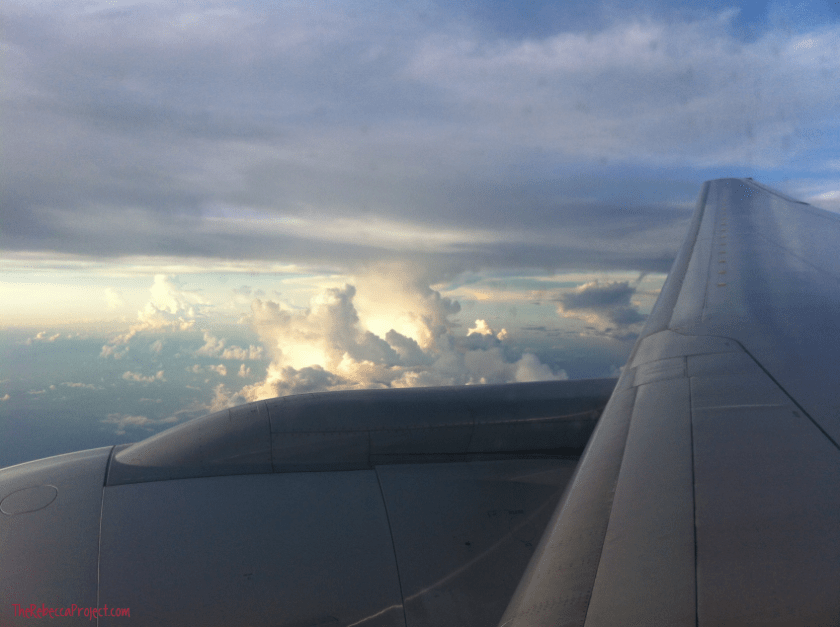
I feel as though time has stopped. I’ve felt like that a lot since I departed Sydney a few days ago. It’s a combination of different time zones, emotional exhaustion, odd sleeping habits and anxiety. Singapore is a nexus: I’m not at either of the places I call home. I am getting impatient, too. That pool of anxiety about the flight, the time, the weather. There’s nothing more I want than to just climb aboard and settle in.

IMG_5052a

So I am waiting in the Snooz Lounge where the American and I spent some time in the middle of our 37-hour flight all those months ago. My body cries out for a nap, but I want to use the time aboard for such things. Outside, a tropical storm is rolling over Singapore, and I am watching the spectacle from the comfort and safety of the best terminal in the world. Little people below race around in oddly shaped carts servicing the Singapore Airlines 777 that just arrived to Gate B2.

It’s been a very emotional few days for me, and I am just spent. It was so hard leaving my family and friends, and it always is. But this was extra hard. I’d spent three months back in home with the whole crew, and so it’s understandable that the bonds are stronger than usual. It’s getting harder and harder to leave them. One day, I don’t know if I will be able to.

But I know that even in this state of fogginess, I’ve been so incredibly lucky to be able to spend this time with my family and friends. And time is the most important thing: you can’t make more of it. All this emotion reminds me that I am alive, that I am loved and that I love. A good friend of mine told me that ‘crying is feeling life physically’, and I appreciated hearing that. These tears are a happy, sad, tired, anxious tears. But the one thing these tears are not is regretful. I have lived these last three months fully, and I am proud of that. I’d do it again in a heartbeat.

And so in the midst of wallowing in the sadness of not being with my family and friends back in Sydney, I turn my focus to this next phase. I am about to board a flight back to SFO, back to the place I have chosen as my home, and back into the waiting arms of the man I love. I’m incredibly fortunate to have such lovely people around me in Sydney and San Francisco. When I get there, I will unpack and prepare for the next chapter of my American life. But there’s always a piece of my heart still back in Sydney.

Anzac Day

I am winding up my last week here in Sydney before I head home to San Francisco via Singapore. I have been enjoying the frenzy of activity that usually comes with the wrapping up life in one spot: impromptu coffees, trips to the footy, dinners with old friends.

I am also in the throes of trying to work out the most effective way to get all of the stuff home with me (posting? shipping? excess baggage?) but I won’t know until I actually just pack. You see, the issue of packing is really quite mundane, but I am only concerning myself with this because if I stop to consider how sad I am to leave my loved ones, this whole last week will be miserable. Onwards, Bec, with strength and filing the happy memories away for the future.

anzac-07[source]

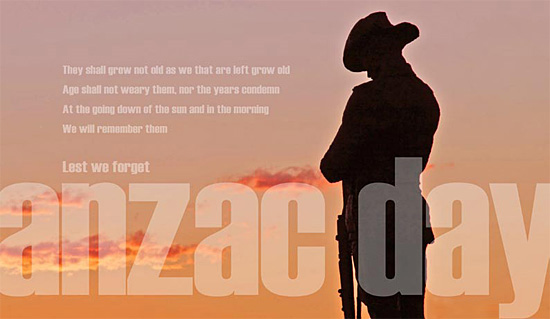
Tomorrow is Anzac Day and it’s a big day on the Australian social calendar. It’s the one day of the year we pay tribute to all those who have served Australia and New Zealand in battle. The day starts with the Dawn Service at thousands of venues around the nation, and a few other sites worldwide (such as Gallipoli in Turkey). I love the tradition, the history of this day. I love reciting the ‘Ode of Remembrance’:

They shall grow not old, as we that are left grow old:
Age shall not weary them, nor the years condemn.
At the going down of the sun and in the morning
We will remember them.

There’s something about a crowd of people repeating the last line of the Ode, and the lone bugler playing the Last Post that makes me cry.
Every.
Single.
Time.
Just beautiful.

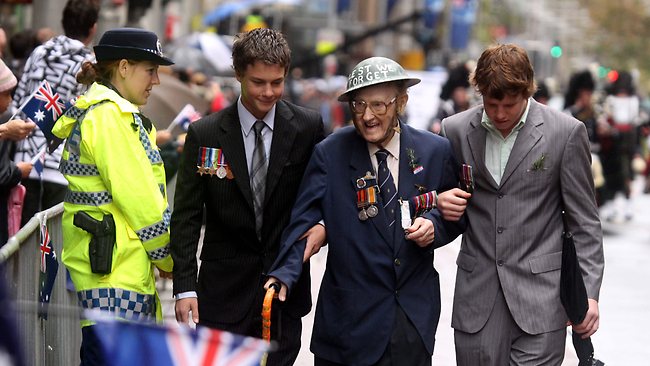
A Digger is flanked by two young men displaying the medals of a relatives in the Anzac Day Parade, 2011.

A Digger is flanked by two young men displaying the medals of a relatives in the Anzac Day Parade, 2011.

[Source]

Following the Dawn service at the Cenotaph in Martin Place, there’s a televised parade featuring the vets and those currently serving, and the families of those who served. Everyone heads to the pub for a beer and a yarn, and then there’s plenty of BBQs, barefoot bowls or footy games to watch. Tomorrow, there’s even AFL being played in New Zealand: the Swans take on St Kilda in Wellington, so I’m looking forward to seeing that. It’s my favourite Aussie holiday, alongside Melbourne Cup day.

I’ll raise a glass of Waterfords Blood Orange to the Anzacs tomorrow, and enjoy the day with family and friends. Lest we forget.